
OpenAI Acquires Astral: After Models, the Conquest of the Entire Python Stack
OpenAI acquires Astral, the studio behind Ruff and uv. Goal: control the entire Python stack, from linter to package manager, against Anthropic and Cursor.
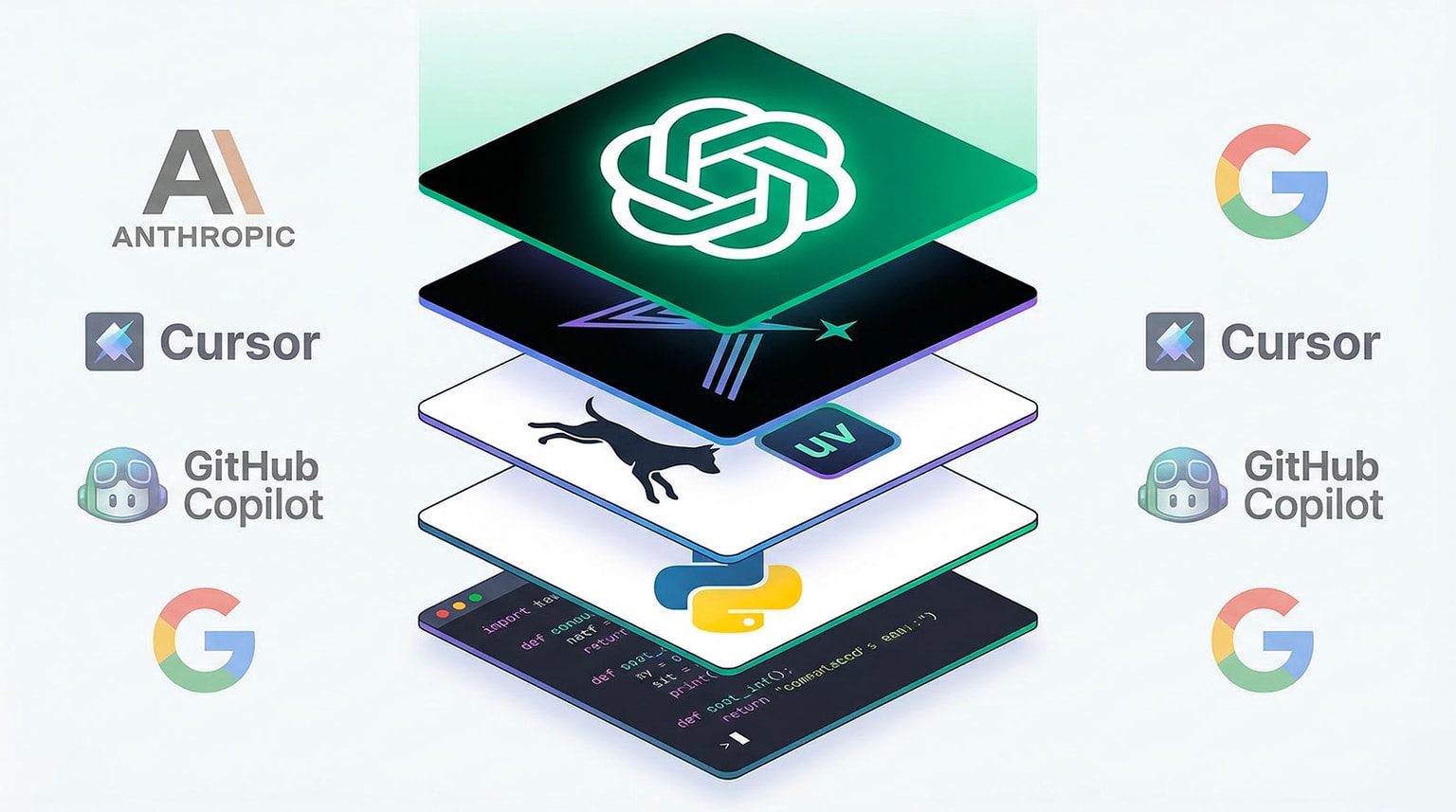
OpenAI just acquired Astral, the open source studio behind Ruff and uv — the two fastest Python tools on the market. The acquisition was reported by Reuters on March 19, 2026.
This is not a minor acquisition. It's a declaration that OpenAI wants to control every layer of the AI dev workflow — from model to linter. Ruff runs 100x faster than its competitors. uv is 80x faster than pip. OpenAI is buying tools that eliminate idle developer resources.
Ruff and uv: the tools every AI dev already uses
Ruff is a Python linter and code formatter. A linter is a tool that detects errors and bad practices in your code before you even run it. What makes Ruff special: it's written in Rust (a programming language known for its speed) instead of Python.
The result: Ruff is 10 to 100 times faster than flake8, pylint, or black — the legacy Python linters. The simplest metaphor: it's like switching from a gas car to a Tesla. Same road, 10 times faster.
uv is Astral's second tool. A Python package manager — the tool that installs and manages dependencies (external libraries) for your projects. uv replaces pip, pip-tools, pyenv, virtualenv, and poetry. All in one tool. Also written in Rust, uv is 80 times faster than pip at dependency resolution.
Both tools are already adopted by the core of the AI ecosystem: Hugging Face, Pydantic, FastAPI, Airbnb. Ruff became the de facto standard in AI/ML projects since 2024. When you open a Python AI project today, chances are Ruff is already configured.
Why OpenAI buys tooling instead of talent
The logic is simple. Python is the reference language for AI and machine learning. Controlling Python tooling means being present in the workflow of every AI developer on the planet.
When you use Ruff, you think OpenAI. When uv installs your dependencies in 2 seconds instead of 3 minutes, you think OpenAI. It's a Trojan horse in every terminal.
The most obvious comparison: Microsoft's acquisition of GitHub in 2018. Same logic. Microsoft didn't buy GitHub for the source code. They bought it to be part of the daily workflow of 100 million developers. OpenAI is doing exactly the same thing with Astral.
With this acquisition, OpenAI completes its stack: ChatGPT for conversation, Codex and Operator for execution, and now Ruff and uv for native tooling. OpenAI is shifting from "AI lab" to "complete dev platform".
The AI dev stack war: Anthropic, Cursor, Google
OpenAI is not alone in this race. The AI dev tools market has become a battlefield.
Anthropic is pushing Claude Code — a development agent targeting the same segment: Python and JavaScript developers. Cursor offers an AI IDE that already integrates Ruff and uv natively. GitHub Copilot (Microsoft) dominates in the IDE space. Google is deploying Gemini Code Assist and Firebase Studio.
OpenAI takes a different path. Instead of building an IDE from scratch, it acquires the open source infrastructure already adopted by millions of developers. The advantage: zero adoption friction. Devs already have Ruff in their projects. They don't need to change anything.
| Layer | OpenAI Product | Main Competitor |
|---|---|---|
| Model | GPT-4.5 / o3 | Claude 3.7 (Anthropic) |
| Coding agent | Codex / Operator | Claude Code (Anthropic) |
| Python linter | Ruff (ex-Astral) | pylint, flake8, black |
| Package manager | uv (ex-Astral) | pip, poetry, pyenv |
| IDE | — | Cursor, VS Code + Copilot |
| Deployment | — | Firebase Studio (Google) |
Charlie Marsh and Astral: where this tool came from
Astral was founded by Charlie Marsh in San Francisco. The studio was backed by Accel, Felicis, and Abstract Ventures — top-tier tech investors.
Astral's philosophy: build in Rust for maximum performance. Every tool is designed to be an order of magnitude faster than the status quo. Not 2x faster. 10x. 100x.
The story: Ruff became the Python standard in under two years. No marketing campaign. No sales team. Just raw performance. When a linter analyzes your code in 200 milliseconds instead of 20 seconds, word of mouth does the rest.
What this means for Ruff and uv developers
This is the question every developer is asking today: will Ruff become paid? Will uv stay open source?
The likely answer: yes, Ruff and uv will remain open source. OpenAI has every incentive to keep them free and open. Ruff is its Trojan horse in every Python project worldwide. Making Ruff paid would mean closing the door it just bought.
The business model will be elsewhere. Deeper integration with ChatGPT and Codex. Premium features for enterprises. Usage telemetry to improve code models. Free tooling is the funnel. Premium services are the product.
| Tool | Speed | Language | Open source | Owner |
|---|---|---|---|---|
| Ruff (OpenAI) | 100x flake8 | Rust | Yes | OpenAI |
| flake8 | Slow | Python | Yes | Community |
| pylint | Very slow | Python | Yes | Community |
| black | Medium | Python | Yes | Community |
| Biome (JS) | Fast | Rust | Yes | Community |
In summary:
- OpenAI announced the acquisition of Astral on March 19, 2026 — the open source studio behind Ruff and uv
- Ruff is the Python linter written in Rust, 10 to 100x faster than flake8, black, or pylint — adopted by Hugging Face and Pydantic
- uv replaces pip while being 80x faster at Python dependency resolution
- OpenAI strengthens its position against Anthropic (Claude Code), Cursor, and GitHub Copilot in the AI dev tools war
- The acquisition amount was not disclosed
OpenAI isn't just buying tools — it's buying time. Every second eliminated by Ruff, every installation accelerated by uv, is an idle developer resource activated. Multiplied by the millions of Python devs worldwide, that's a planetary-scale productivity infrastructure. OpenAI just realized that the real monopoly isn't the model — it's the workflow.


