Community-Led Growth for Developer Tools: Strategy & Examples
A complete guide to Community-Led Growth (CLG) for developer tools. Strategy, Discord/GitHub/Reddit playbooks, case studies from Supabase, Vercel, and Tailwind CSS, plus how to combine community with advertising.
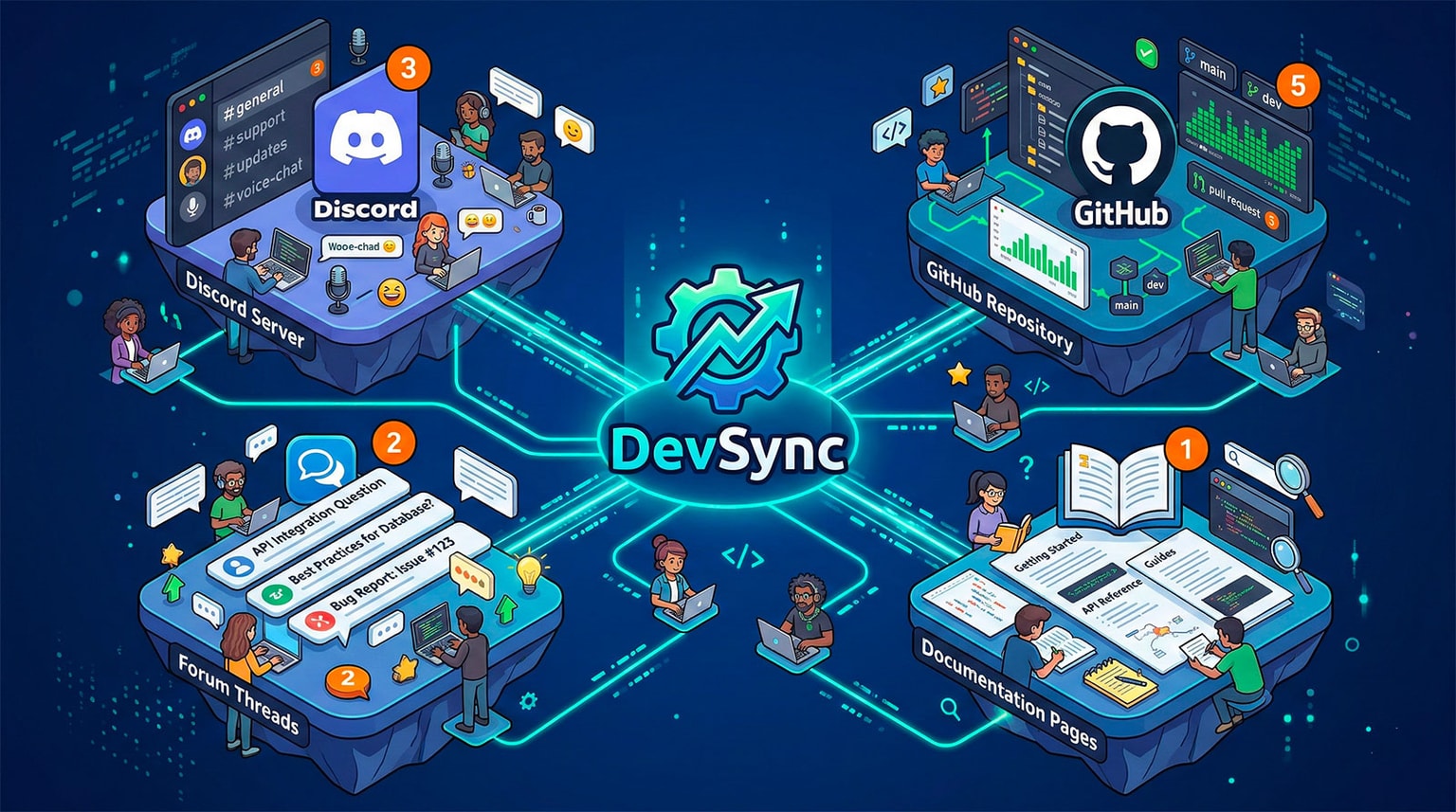
Community-Led Growth for Developer Tools: Strategy & Examples
The most valuable developer tool companies in 2026 have something in common: thriving communities. Supabase built a $500M+ company on the back of an obsessive community. Vercel turned Next.js into the default React framework by fostering a passionate developer ecosystem. Tailwind CSS went from a controversial utility-first CSS framework to an industry standard through grassroots community adoption.
This is not a coincidence. Community-Led Growth (CLG) has emerged as the most powerful go-to-market strategy in B2D marketing -- outperforming product-led growth, sales-led growth, and marketing-led growth in terms of retention, expansion, and long-term defensibility.
But building a developer community is hard. Most attempts fail. This guide covers the strategies that actually work, with real examples and actionable playbooks for Discord, GitHub, Reddit, and beyond.
What Is Community-Led Growth?
Community-Led Growth (CLG) is a go-to-market strategy where the community around your product becomes the primary engine for acquisition, activation, retention, and expansion.
Unlike traditional growth strategies where the company pushes users through a funnel, CLG creates an environment where developers pull each other in through shared learning, peer support, and collective enthusiasm.
CLG vs. Other Growth Strategies
| Strategy | Primary Driver | Speed | Defensibility | Cost |
|---|---|---|---|---|
| Sales-Led Growth | Sales team | Medium | Low | Very High |
| Marketing-Led Growth | Content & Ads | Fast | Low | Medium-High |
| Product-Led Growth | Product experience | Medium | Medium | Medium |
| Community-Led Growth | Community | Slow | Very High | Low-Medium |
The CLG Flywheel
The power of CLG comes from its self-reinforcing cycle:
- Attract: Developers discover your community through content, word-of-mouth, or advertising
- Engage: They get value -- answers to questions, tutorials, connections
- Activate: They try your product because trusted community members use it
- Contribute: They create content, answer questions, build integrations
- Advocate: They recommend your product to peers
- Attract: Their advocacy brings new developers into the community
Each cycle strengthens the next. A community of 100 active members that loops through this flywheel once generates more sustainable growth than $100,000 in advertising that runs once.
Why CLG Works So Well for Developer Tools
1. Developers Trust Peers Over Marketing
Developers are famously skeptical of marketing claims -- a core trait of developer psychology. But they deeply trust peer recommendations. When a developer they respect says "I switched to Tool X and it is a game-changer," that carries more weight than any ad creative.
Data point: 78% of developers say peer recommendations are their primary discovery channel for new tools.
2. Developer Tools Have Network Effects
Many developer tools become more valuable as more people use them:
- More users = more Stack Overflow answers
- More users = more plugins and integrations
- More users = more tutorials and examples
- More users = easier to hire developers who know the tool
Community accelerates these network effects.
3. Developers Create Content
Unlike most B2B users, developers actively create content about the tools they use. Blog posts, YouTube tutorials, open source examples, Twitter threads -- developers generate enormous volumes of free marketing for products they love.
A healthy community channels and amplifies this creation.
4. Support Scales Through Community
Developer tools face a brutal support challenge: technical questions are complex, time-consuming, and varied. Community-based support (where experienced users help newer ones) scales far better than a support team.
Communities with good knowledge bases can deflect 40-70% of support tickets.
Platform Playbooks
Discord: The Real-Time Hub
Discord has become the de facto home for developer communities. It offers real-time chat, voice channels, threads, and a familiar interface for developers already using it for gaming and other communities.
Setting Up Your Discord for CLG
Essential channels:
| Channel | Purpose | Moderation Level |
|---|---|---|
| #welcome | Onboarding, rules, introduction | Bot-managed |
| #general | Open conversation | Light |
| #help | Technical support | Moderate |
| #showcase | What developers built | Light |
| #announcements | Product updates (read-only) | Admin only |
| #feedback | Feature requests, bug reports | Moderate |
| #off-topic | Non-product conversation | Light |
| #jobs | Career opportunities | Moderate |
Advanced channels (add as community grows):
- Technology-specific channels (#react, #python, #kubernetes)
- Project-type channels (#side-projects, #enterprise)
- Voice channels for community calls and office hours
Discord Growth Tactics
Week 1-4: Seed the community
- Invite your first 50 users personally. Email, DM, whatever it takes.
- Be present 8+ hours a day answering questions.
- Share valuable resources daily (not just your own product content).
- Set a warm, helpful tone that others will follow.
Month 1-3: Build engagement habits
- Host weekly "office hours" voice calls where developers can ask anything
- Create a "Show & Tell" event where members demo what they built
- Run coding challenges with small prizes (swag, credits, features)
- Highlight helpful community members in #announcements
Month 3-6: Enable the community to self-sustain
- Appoint community moderators from active members
- Create a contributor program with roles and recognition
- Build a FAQ bot that answers common questions
- Start a community newsletter highlighting top discussions
Month 6-12: Scale and measure
- Track community-attributed signups and conversions
- Measure support ticket deflection
- Document community-generated content
- Expand into regional or language-specific channels
Discord Metrics to Track
| Metric | How to Measure | Good Benchmark |
|---|---|---|
| Daily Active Users (DAU) | Discord analytics | 10-15% of total members |
| Messages per day | Discord analytics | 100+ at 1,000 members |
| Help response time | Manual or bot | Under 30 minutes |
| Unanswered questions | Weekly audit | Under 10% |
| Member retention (30-day) | Cohort analysis | 40%+ |
GitHub: The Collaboration Engine
For open source or developer-facing products, GitHub is not just a code repository -- it is a community platform.
GitHub Community Strategy
GitHub Discussions: Your async community
GitHub Discussions gives you a forum directly in your repo. Developers are already on GitHub, so the friction to engage is near zero.
Categories to set up:
- Q&A: Technical help (mark accepted answers)
- Show and Tell: What people built
- Ideas: Feature requests and voting
- General: Open discussion
- Announcements: Product updates
GitHub Issues: Product feedback loop
Well-managed issues create a transparent, participatory product development process:
- Use issue templates for bug reports and feature requests
- Label issues clearly (good-first-issue, help-wanted, priority-high)
- Respond to every issue within 24 hours
- Reference issues in release notes when resolved
GitHub as a growth channel:
| Activity | Growth Impact | Effort |
|---|---|---|
| Maintaining high-quality README | High | Medium |
| Good first issues for contributors | High | Low |
| Regular releases with detailed changelogs | Medium | Medium |
| Sponsoring/contributing to adjacent projects | Medium | Low |
| GitHub Actions integrations | Medium | High |
| Star-worthy code quality and docs | High | High |
Reddit: Organic Discovery
Reddit is where developers go to discover, evaluate, and discuss tools. You cannot fake it on Reddit, but you can succeed with genuine participation.
Reddit Strategy for Developer Tools
Subreddits to monitor and engage:
- r/programming (4M+ members)
- r/webdev (2M+ members)
- r/devops (300K+ members)
- r/SaaS (150K+ members)
- Technology-specific subreddits (r/reactjs, r/golang, r/rust, etc.)
What works on Reddit:
- Answering questions honestly, even when the answer is "our competitor does this better"
- Sharing useful technical content without promoting your product
- Launch posts with genuine "we built this, AMA" energy
- Transparent discussions about engineering decisions
- Admitting mistakes and sharing what you learned
What gets you destroyed on Reddit:
- Astroturfing (fake accounts promoting your product)
- Overly promotional language
- Ignoring criticism or deleting negative comments
- Marketing-speak in technical discussions
- Posting links without participating in discussions
Reddit metrics:
| Metric | How to Track | What It Tells You |
|---|---|---|
| Brand mentions | Reddit search / alerts | Awareness and sentiment |
| Upvotes on posts | Reddit analytics | Content resonance |
| Comment engagement | Manual tracking | Community interest |
| Traffic from Reddit | UTM + GA4 | Conversion potential |
Case Studies: CLG Done Right
Supabase: The Community-First Unicorn
The strategy: Supabase positioned itself as "the open source Firebase alternative" and built everything in public.
Key community tactics:
- Launch Week: Quarterly product launch events with daily announcements, creating community anticipation and engagement
- Open source everything: Full transparency builds trust and contributions
- Community tutorials: Actively supported developers creating Supabase content
- Discord community: 200,000+ members with active engagement
- Twitter presence: Founders and team members actively engaged with developers daily
Results:
- 70,000+ GitHub stars
- 200,000+ Discord members
- From launch to $500M+ valuation in 3 years
- Community-generated content exceeds company-generated content 10:1
Key lesson: Radical transparency and building in public creates a community that feels ownership over the product. Developers do not just use Supabase -- they feel like they are part of building it.
Vercel: Framework-First, Platform-Second
The strategy: Vercel invested heavily in Next.js (the framework) before monetizing Vercel (the platform).
Key community tactics:
- Next.js Conf: Annual conference that became a flagship developer event
- Templates and examples: Hundreds of starter templates for common use cases
- Contributor-friendly: Active open source contribution from community members
- Twitter/X presence: Guillermo Rauch's personal brand as thought leader
- Learning platform: Next.js Learn provided structured education
Results:
- Next.js became the most popular React framework
- 120,000+ GitHub stars on Next.js
- Vercel grew to $2.5B+ valuation
- Self-serve revenue driven primarily by developer advocacy
Key lesson: Invest in the open ecosystem first. When developers love your framework, migrating to your platform is natural. The community around Next.js IS Vercel's growth engine.
Tailwind CSS: From Controversy to Standard
The strategy: Tailwind CSS grew from a controversial utility-first CSS approach to an industry standard through relentless community building.
Key community tactics:
- Addressed criticism head-on: Adam Wathan wrote detailed articles explaining the philosophy
- Tailwind UI: Premium component library funded continued open source development
- Content creation: Exhaustive documentation and a popular YouTube channel
- Community showcases: Tailwind CSS sites and components shared by community
- Headless UI: Extended the ecosystem with accessible components
Results:
- 85,000+ GitHub stars
- Adopted by major companies globally
- Tailwind Labs built into a profitable business
- Community-created component libraries and plugins
Key lesson: Controversy can fuel community growth if you engage with criticism constructively. The developers who initially hated Tailwind became the community that drove its adoption once they tried it.
Combining Community with Advertising
Community-Led Growth and advertising are not opposed. In fact, advertising can dramatically accelerate community growth, and a strong community makes advertising far more effective.
How Advertising Accelerates Community Growth
Problem: The cold start problem. You need members to make a community valuable, but you need a valuable community to attract members.
Solution: Use targeted advertising to solve the cold start problem.
| Advertising Tactic | Purpose | Platform |
|---|---|---|
| Promote free resources (tutorials, templates) | Attract developers with value | Idlen, LinkedIn |
| Advertise community events (office hours, AMAs) | Drive attendance | X/Twitter, Reddit |
| Boost community-generated content | Reward contributors, attract peers | Social ads |
| Target users of competing/complementary tools | Find relevant developers | Idlen (technology-based targeting) |
| Retarget website visitors | Invite to community | Display, social |
The Community + Advertising Flywheel
Here is how the best companies combine both:
- Community produces content (tutorials, showcase projects, answered questions)
- Advertising amplifies top content to reach new developers
- New developers join the community after engaging with content
- Community members generate more content and social proof
- Advertising becomes more effective because of social proof and trust signals
- Cost per acquisition drops as organic and paid compound
Practical Budget Split
For a developer tool company investing in both:
| Stage | Community Budget | Advertising Budget | Ratio |
|---|---|---|---|
| 0-500 members | 70% | 30% | Build first, amplify second |
| 500-2,000 members | 50% | 50% | Equal investment in growth |
| 2,000-10,000 members | 40% | 60% | Community sustains itself, ads scale |
| 10,000+ members | 30% | 70% | Community is the engine, ads are fuel |
Using Idlen to Accelerate Community Growth
In-IDE advertising through Idlen is particularly effective for community growth because:
- Contextual relevance: Ads reach developers actively using relevant technologies
- High engagement: 2-3.5% CTR means more developers actually see your community invitation
- Technology targeting: Reach exactly the developers who would benefit from your community (e.g., target React developers for a React-related community)
- Non-intrusive format: In-IDE ads respect the developer workflow, building positive brand association before they even join
Campaign example: Promote a community resource (free template, tutorial, tool) through Idlen. When developers click, they land on a value page with a CTA to join the Discord community. This converts at 15-25% (resource-to-community-join) compared to 3-5% for direct "join our community" ads.
Common CLG Mistakes and How to Avoid Them
1. Building a Support Channel, Not a Community
The mistake: Your Discord is just a help desk. Members ask questions, your team answers, and nobody else participates.
The fix: Create non-support reasons to engage. Showcase channels, off-topic chat, events, challenges, and recognition programs give members reasons to stay beyond just getting help.
2. Over-Moderating
The mistake: Every message needs approval. Discussion topics are restricted. The community feels corporate and controlled.
The fix: Set clear guidelines but let organic conversation flow. The best communities feel slightly chaotic. Trust your members to self-moderate once norms are established.
3. Expecting Immediate ROI
The mistake: Measuring community by leads generated in month 1.
The fix: Use leading indicators (engagement, content creation, sentiment) for the first 6 months. Business metrics (attributed signups, retention lift, support deflection) become meaningful after 6-12 months.
4. Ignoring the Silent Majority
The mistake: Focusing only on the 5% of vocal members and ignoring the 95% who lurk.
The fix: Create engagement ladders. Lurkers can become reactors (emoji reactions), then commenters, then question-askers, then contributors. Design pathways for each level.
| Level | Behavior | % of Members | How to Engage |
|---|---|---|---|
| Lurker | Reads, does not interact | 60-70% | Weekly digests, polls, easy reactions |
| Reactor | Reacts to messages | 15-20% | Tag in relevant discussions |
| Commenter | Responds to threads | 8-12% | Ask for opinions, highlight their input |
| Contributor | Starts discussions, helps others | 3-5% | Moderator roles, recognition |
| Champion | Creates content, advocates externally | 1-2% | Advisory board, co-creation, swag |
5. No Connection to Product
The mistake: The community exists in a vacuum. Feedback goes nowhere. Product decisions do not reflect community input.
The fix: Create explicit feedback loops. Share product roadmap in the community. Reference community discussions in release notes. When a feature request from the community ships, celebrate it publicly.
6. Platform Lock-In
The mistake: Building your entire community on one platform you do not control.
The fix: Use multiple platforms for different purposes. Own your email list. Cross-post important content. If Discord disappears tomorrow, can you still reach your community?
Building Your CLG Strategy: Step by Step
Phase 1: Foundation (Month 1-3)
Goal: Establish your community presence and attract the first 100 active members.
Actions:
- Choose your primary platform (Discord for most developer tools)
- Set up channel structure and onboarding flow
- Write community guidelines that feel human, not corporate
- Personally invite your first 50 members (existing users, Twitter followers, early adopters)
- Be present daily -- answer every question, start every discussion
- Create your first 5 pieces of community content (tutorials, templates, examples)
- Launch a small Idlen campaign ($2-3K) promoting a free resource with community CTA
Metrics to hit:
- 100 Discord members
- 10+ messages per day
- 80%+ question response rate
- 5+ community-generated messages per day
Phase 2: Growth (Month 3-6)
Goal: Build engagement habits and reach 500+ active members.
Actions:
- Start weekly events (office hours, code reviews, AMAs)
- Launch a contributor program with recognition and rewards
- Expand to secondary platform (GitHub Discussions or Reddit)
- Increase advertising spend to promote community content ($5K/month)
- Appoint first community moderators from active members
- Create a community newsletter (weekly or biweekly)
- Track community-attributed signups and conversions
Metrics to hit:
- 500 Discord members
- 50+ messages per day
- 5+ community members answering questions (not just your team)
- First community-generated blog posts or tutorials
Phase 3: Scale (Month 6-12)
Goal: Build a self-sustaining community that drives measurable business results.
Actions:
- Hire a dedicated community manager (or DevRel with community focus)
- Scale advertising to amplify best community content ($8-15K/month)
- Launch community-driven initiatives (open source projects, hackathons)
- Build a knowledge base from community Q&A
- Integrate community signals into product development process
- Measure and report community business impact quarterly
Metrics to hit:
- 2,000+ Discord members
- 200+ messages per day
- Community members answer 50%+ of questions
- 20%+ of new signups touch community before converting
- Measurable retention lift for community members vs. non-members
Phase 4: Flywheel (Month 12+)
Goal: Community becomes a self-reinforcing growth engine.
Actions:
- Community generates more content than your team
- Word-of-mouth from community drives 30%+ of signups
- Support ticket deflection saves measurable support costs
- Community advisory board influences product roadmap
- Flagship community events draw hundreds or thousands
- Advertising focuses on amplification, not cold acquisition
Measuring CLG Impact
The CLG Scorecard
| Metric | How to Measure | Impact |
|---|---|---|
| Community-attributed signups | UTM tracking, referral codes | Direct acquisition |
| Activation rate (community vs. non) | Cohort analysis | Product-market fit signal |
| Retention rate (community vs. non) | Cohort analysis | Revenue impact |
| Support deflection | Tickets pre/post community | Cost savings |
| Community content volume | Manual tracking | Marketing leverage |
| NPS (community vs. non) | Survey | Brand health |
| Time to value (community vs. non) | Product analytics | Onboarding efficiency |
Expected Impact
Based on data from developer tool companies with mature communities:
| Metric | Without Community | With Active Community |
|---|---|---|
| Trial-to-paid conversion | 8-12% | 15-25% |
| Monthly churn | 5-8% | 2-4% |
| NPS | 30-40 | 55-70 |
| Support tickets per user | 2-4/month | 0.5-1.5/month |
| Organic traffic growth | 10-20% YoY | 40-80% YoY |
| CAC (blended) | $200-500 | $100-250 |
Frequently Asked Questions
What is Community-Led Growth for developer tools?
Community-Led Growth (CLG) is a go-to-market strategy where a developer community drives product adoption, retention, and expansion. Instead of traditional sales funnels, CLG relies on peer recommendations, shared learning, and collective engagement to grow the user base.
Which platforms are best for developer community building?
Discord is the top platform for real-time developer community engagement, followed by GitHub Discussions for open source projects and Reddit for organic discovery. The best strategy uses multiple platforms: Discord for engagement, GitHub for collaboration, and content platforms for awareness.
How do you measure the ROI of community-led growth?
Measure CLG ROI through community-attributed signups, activation rates of community members vs non-members, retention and expansion metrics, community-generated content volume, and support ticket deflection. For a complete measurement framework, see our guide on measuring developer advertising ROI. Community members typically convert 2-3x better and churn 40-60% less than non-community users.
How long does it take to build a developer community?
Building a meaningful developer community takes 6-18 months. Expect 3-6 months to reach critical mass (100-500 active members), 6-12 months for self-sustaining engagement, and 12-18 months for measurable business impact. The key is consistency and genuine value creation.
Can you combine community-led growth with paid advertising?
Yes, and it is highly effective. Use advertising to accelerate community growth, promote community content, and reach developers who would never discover your community organically. Platforms like Idlen can drive relevant developers to your community while maintaining the authentic, value-first ethos that communities require.
Start Building Your Developer Community
Community-Led Growth is not fast, and it is not easy. But for developer tools, it is the most defensible growth strategy available. Competitors can copy your features, outspend you on ads, and undercut your pricing. They cannot replicate a community of developers who genuinely care about your product and each other.
Start small. Start genuine. Start today.
And when you are ready to accelerate your community growth, Idlen's in-IDE advertising platform helps you reach the right developers with contextual, respectful ads that drive community engagement. Promote your tutorials, templates, and community events to developers who are actively working with relevant technologies -- achieving 2-3.5% CTR and building the kind of awareness that fills your Discord with engaged members.
Reach developers where they work
Advertise directly inside developer tools. Native ads, real engagement, zero wasted impressions.