
Lovable launches mobile apps on iOS and Android: vibe coding now fits in your pocket
Lovable rolls out its free mobile app on the App Store and Google Play. Code by voice or prompt from your phone, switch between mobile and desktop, and get notified when a build is ready. A strategic move for the startup that raised $330M Series B.
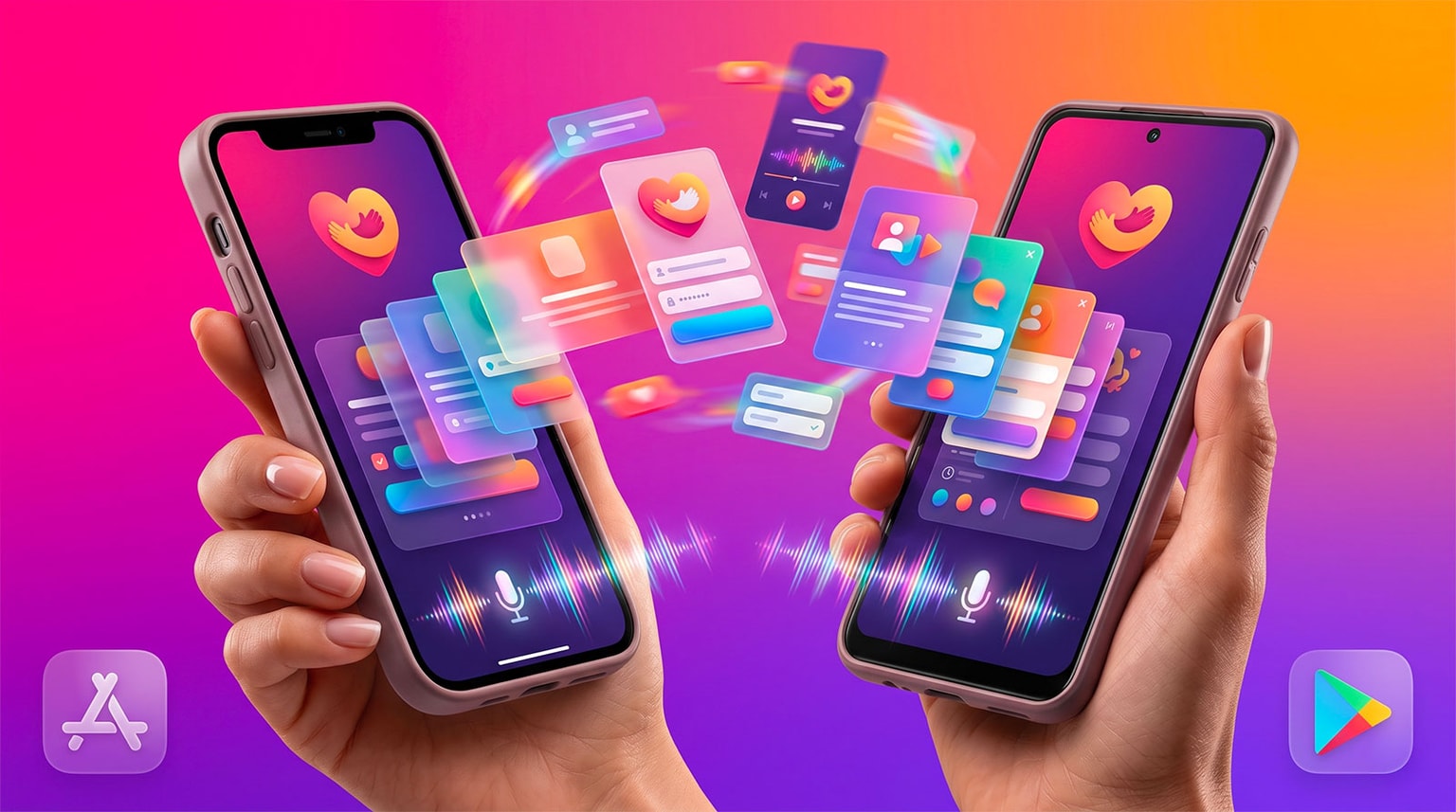
On April 28, 2026, Lovable rolled out its free mobile app on the App Store and Google Play Store. The promise: build an app without code from your iPhone or Android, by text prompt or voice dictation, with seamless sync between mobile and desktop. For the vibe-coding startup that raised $330M Series B last year, this is one of the most strategic product launches of the year.
What the Lovable mobile app does
The app reproduces the essence of the desktop experience in a mobile-first format:
- Prompt-based creation: describe the app you want in natural language, Lovable generates the code and deploys a cloud build
- Voice-to-code: dictate your idea while you walk or drive; the app captures the idea and turns it into a spec
- Cross-device sync: pick up on the phone a project started on the desktop (and vice versa)
- Push notifications: get alerted when a build is ready to review
- Live preview: visualize the generated app directly on your phone, like a PWA
It's free to download, monetized via the existing Lovable Pro plans on the web side.
Why this release matters more than it looks
1. Idea capture happens on mobile, not desktop
The key observation from CEO Anton Osika: 80% of side-project ideas come outside the office. During coffee, in the subway, in line. If Lovable wants to be the default tool for "vibe coding," it has to be where ideas are born — not just where they're executed.
This logic also explains why Cursor recently integrated a parallel agent-first interface — capturing developers in their friction moments, everywhere.
2. Voice-coding, the real differentiator
Where direct competition (Bolt.new, v0, Replit Agent) remains stuck in the browser, Lovable bets on voice prompting. With a phone, it's natural. On a laptop, it's still niche. Lovable turns a weakness (mobile screen size) into leverage (voice works better than keyboard).
3. The "Spotify of AI" effect
Spotify killed iTunes in 2010 thanks to mobile-first: the moment when music is consumed. Vibe coding follows the same trajectory. Tools that stay desktop-only will lose to those colonizing mobile, because vibe coding is a leisure and opportunity activity, not a structured professional workflow.
Competition staring at the wall
| Tool | Mobile | Voice | Pricing |
|---|---|---|---|
| Lovable | iOS+Android | Yes | Free + Pro |
| Bolt.new | Web responsive | No | Free + Pro |
| v0 (Vercel) | Web responsive | No | Free + Pro |
| Replit | Existing app | Limited | Free + Pro |
| Cursor | - | - | $20-200/mo |
The lead is temporary — Bolt and v0 will only take a few months to ship their own mobile apps. But Lovable has 6-9 months to establish itself as the mobile-first default of vibe coding. That's exactly the window Notion needed to become the default doc app, or Figma the default design app.
What this changes for developers
For indie hackers
Mobile lowers the entry barrier to zero. No more need for an open Macbook to test an idea. You think of an app in the morning shower: dictate the prompt while getting your coffee, the build is ready before you arrive at the office. Our guide build an app in 24h, from idea to deployment becomes even more actionable with this new workflow.
For "classic" developers
Lovable doesn't replace Cursor or Claude Code. But it becomes the rapid prototyping tool — the one used to validate an idea in 30 minutes before opening a real project. It's the modern dev's "sketch pad". Our comparison Claude Code vs Copilot Workspace vs Cursor Composer remains relevant for more mature phases.
For non-developers
This is probably the most important target. Lovable mobile aims at non-technical entrepreneurs, designers, PMs, students. People who want a working MVP without learning React. The total addressable market explodes.
Strategic context: vibe-coding consolidation
Lovable is positioning aggressively as the category's aggregator. A few recent signals:
- $400M ARR reached early 2026 (source)
- Lovable Payments launched via Paddle for native monetization (source)
- Acquisitions in progress according to rumors (potential buyouts of small regional players)
The mobile app cements this ambition. Lovable doesn't want to be one tool among many — it wants to be the default platform of consumer vibe coding, where Cursor keeps the pro developer market.
Limits to watch
The mobile experience has structural constraints Lovable can't erase:
- The screen stays small. To debug a complex app, mobile doesn't replace desktop. Lovable admits this by keeping cross-device sync.
- Cloud latency. Builds run server-side. On degraded 4G, "voice-to-prompt-to-build" can take 60-120 seconds — long for mobile.
- App Store policies. Apple has previously taken passes against apps that "generate executable code." Lovable doesn't execute the code in the app (builds are hosted on Lovable cloud), which probably bypasses the issue — but the regulatory risk exists.
- Pricing. Free to download, but intensive builds consume credits. The question is whether mobile usage will push Pro conversions or create frustration.
Conclusion: vibe coding enters its mass-market phase
Lovable's mobile app isn't just one feature among others. It's the moment when vibe coding leaves developers' laptops to enter regular people's phones. If adoption follows Notion mobile's trajectory (35M downloads in 18 months), Lovable can become the default prototyping tool for tens of millions of people.
For founders who want to capitalize on this shift, our guide no-code vs vibe coding vs classic dev for startups remains the best compass for choosing the right stack at the right moment.
Mobile vibe coding is one of the three or four major product shifts of 2026 — on par with autonomous agents and physical AI. Startups that dominate the moments of capture (the phone, voice, notifications) will have a lasting advantage over those staying browser-only. For the best prompts that work on Lovable, read our guide 10 best prompts for Lovable, Bolt and Cursor.


