NeoCognition Exits Stealth with $40M to Build AI Agents That Learn Like Humans — And Intel's CEO Is on the Cap Table
On April 21, 2026, NeoCognition emerged from stealth with a $40M seed round co-led by Cambium Capital and Walden Catalyst. Intel CEO Lip-Bu Tan and Databricks co-founder Ion Stoica joined as angels. The thesis: agents that continuously learn the structure of their environment.
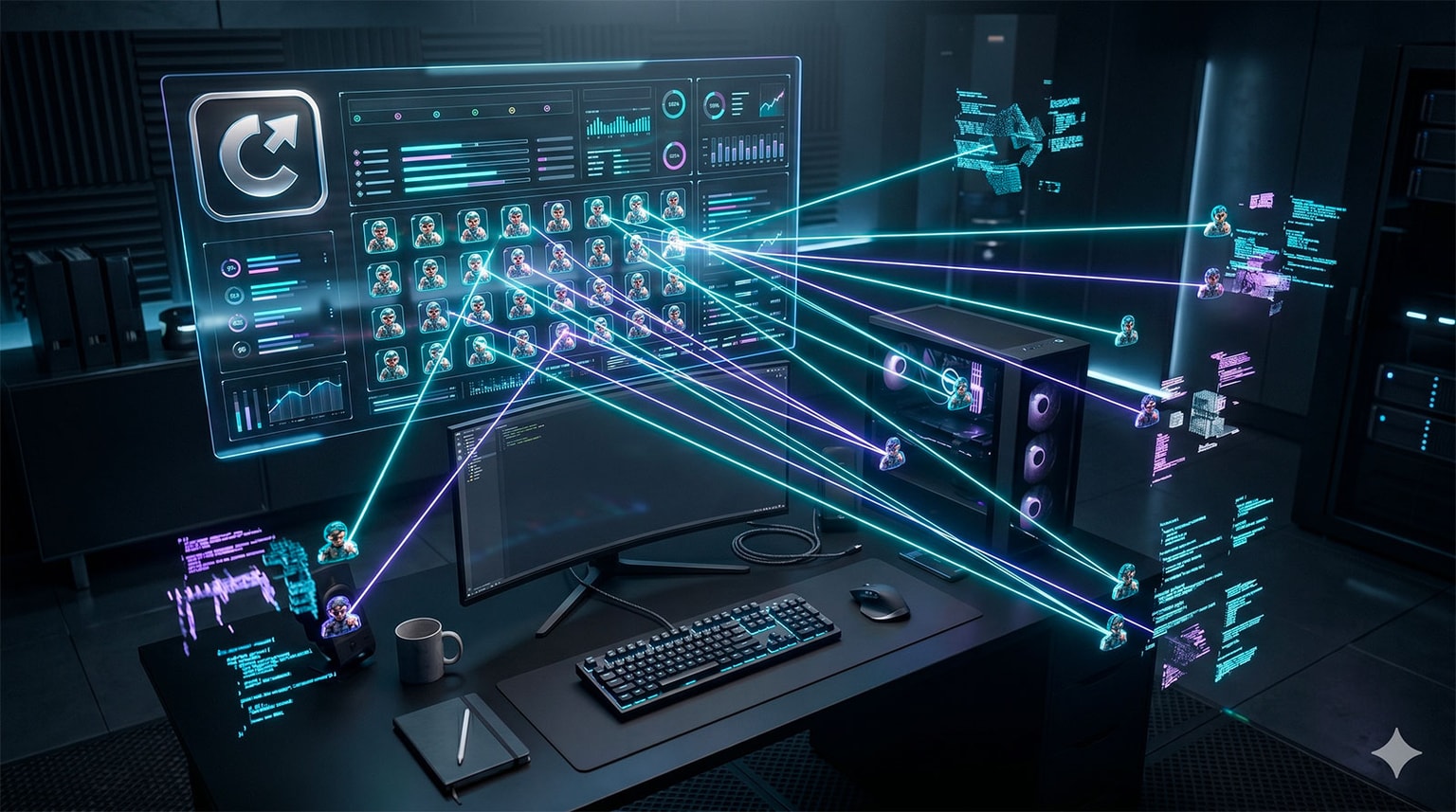
Seed rounds for AI agent startups aren't rare anymore. But $40 million seed rounds backed by a sitting Intel CEO and a Databricks co-founder are. On April 21, 2026, NeoCognition emerged from stealth with a $40 million seed co-led by Cambium Capital and Walden Catalyst Ventures, with Vista Equity Partners participating and angels including Intel CEO Lip-Bu Tan and Databricks co-founder Ion Stoica. The thesis is sharper than the round size: today's AI agents fail in production because they can't learn the shape of their environment. NeoCognition wants to fix that — and the people investing in it are the same people whose infrastructure runs those environments.
The reliability problem — stated in one sentence
Every enterprise that has deployed AI agents in production in the last twelve months has hit the same wall. Agents are brilliant on demo tasks and brittle on real ones. They work for three turns and then get lost. They solve the tutorial and fail the incident. They handle your staging environment and crash against your production one.
NeoCognition's framing: this isn't a prompting problem or a model-size problem. It's a learning problem. Agents today are static. They don't absorb the structure of your codebase, the constraints of your compliance rules, the quirks of your tooling. Every deployment starts from zero context and stays there.
The company's answer is a class of agents that "continuously learn the structure, workflows and constraints of the environments they operate in, and specialize into domain experts by learning a world model of work." In plain language: agents that stay in your environment long enough to get good at it.
Why this hits a real nerve — the connective tissue to Linear, Cursor and Figma
The timing is not accidental. The last six weeks of AI agent news have all pointed at the same unspoken problem.
Linear declared issue tracking dead on the claim that "agents become useful through context." Figma opened its canvas to agents via MCP and Skills on the claim that reusable workflows capture team learnings. Cursor 3 shipped parallel agents and Design Mode on the claim that orchestration of many agents beats improvement of one. Every one of these product bets is a workaround for the same underlying gap — agents don't learn.
NeoCognition is the first well-funded team saying that gap is the product, not a workaround. Yu Su — CEO, Sloan Research Fellow, and lead of one of the largest academic AI agent labs at Ohio State — and co-founders Xiang Deng and Yu Gu are building the "self-learning" layer the rest of the stack assumes must exist.
Who's backing it — and why that cap table matters
| Investor | Role | Why it's interesting |
|---|---|---|
| Cambium Capital | Co-lead | AI-native thesis fund |
| Walden Catalyst Ventures | Co-lead | Deep-tech + semiconductors lineage |
| Vista Equity Partners | Participant | Enterprise SaaS distribution |
| Lip-Bu Tan (angel) | Intel CEO | Hardware + supply chain signal |
| Ion Stoica (angel) | Databricks co-founder | Data platform distribution |
Two names stand out. Lip-Bu Tan, currently the CEO of Intel, angel-investing in an AI agent research lab is a signal about where Intel sees the next ten years of silicon demand — inference-heavy, continuously-learning agents change the compute profile in ways very different from today's batch-training workloads. Ion Stoica's participation is a signal about distribution — Databricks built the enterprise playbook for selling AI infrastructure into Fortune 500 data stacks, and Stoica's check is essentially a bet that NeoCognition will plug into that same motion.
Put differently: the hardware side and the enterprise data side are both signaling that self-learning agents are the next enterprise AI wedge. When both sides point at the same door, it usually opens.
The enterprise play — and the SaaS threat
NeoCognition has said it intends to sell its agent systems primarily to enterprises, including established SaaS companies. This is the second interesting line in the announcement.
"Established SaaS companies" are customers, but they're also structurally threatened. A self-learning agent that learns your Salesforce schema, your HubSpot workflows, your Zendesk queue behavior doesn't just augment those tools — over time it substitutes parts of them. The Linear thesis applied broadly: if the issue tracker was institutionalized idle time, the CRM is too, and the ticketing system is too, and the HRIS is too.
ROX AI's $1 billion valuation on the CRM-agent thesis, Picsart's creator-agent marketplace and Okara's autonomous CMO agent all live in this disruption zone. NeoCognition is the infrastructure layer those disruptors would buy.
The research bet — what "self-learning" actually requires
Under the surface, three technical bets are folded into NeoCognition's mission.
World models of work. Rather than retrieving context per-query (the RAG pattern), agents internalize a persistent model of the environment. This is the same direction Yann LeCun's AMI Labs has been pushing at the research level for two years.
Continuous learning. Today's agents are snapshot-frozen at deployment. NeoCognition's agents update as they work. This is hard — catastrophic forgetting is the well-known failure mode — but it's the only way to get durable domain expertise without infinite retraining.
Specialization over generalization. Where frontier labs chase general capability (Mythos, GPT-5.4), NeoCognition is betting that enterprise buyers want verticalized specialists. A billing reconciliation agent that's excellent at billing reconciliation, not a general agent that handles it when asked.
What this signals for the ecosystem
Three consequences worth watching.
The research-lab-with-GTM model is back. For a moment in 2024–2025, pure research labs looked underpriced versus applied startups. Thinking Machines Lab and AMI Labs were outliers. NeoCognition's $40M seed at stealth-exit suggests the pattern repeats whenever a credible research team pairs with a defined enterprise problem.
Agent-infrastructure gets a real category. "Self-learning" joins "orchestration" (Cursor 3), "product context" (Linear), "design canvas" (Figma) and "agent payments" (Stripe MPP) as distinct infrastructure categories. Each has a different buyer, different price point, different integration motion.
The Idlen principle surfaces again. An enterprise deployment where the agent starts from zero context every Monday morning is institutionalized idle learning — expertise that never compounds. Self-learning agents convert that idle capacity into durable expertise, exactly the pattern we keep seeing across Linear, Cursor 3 and Amazon's AI infrastructure moves.
In summary:
- NeoCognition emerged from stealth on April 21, 2026 with a $40 million seed round.
- Co-led by Cambium Capital and Walden Catalyst Ventures, with Vista Equity Partners and angels Lip-Bu Tan (Intel CEO) and Ion Stoica (Databricks co-founder).
- Founded by Yu Su, Xiang Deng and Yu Gu — Ohio State AI agent lab leaders.
- Mission: AI agents that continuously learn the structure, workflows and constraints of their environment to become domain experts.
- Go-to-market: primarily enterprises, including established SaaS companies.
NeoCognition isn't just another AI agent seed round. It's the first round at this scale whose explicit thesis is that the gap between agent demos and agent deployments is a learning problem, not a model problem. If the thesis holds, the companies that win the agent decade aren't the ones with the best base model — they're the ones whose agents get smarter the longer they live inside your environment. Lip-Bu Tan and Ion Stoica don't write angel checks for thesis that don't hold. The question for every other AI agent startup now is whether their product gets better over time in a given account — or whether the customer is buying a demo that plateaus on day one.
Sources: