OpenAI says Astra and Codex are now drafting physical products
On 3 November 2026 OpenAI described internal work where models design enclosures, boards, and CAD. Two people built a Codex device with Astra in under a week. A newer internal model scored 0.875 on BenchCAD 2.0, against 0.594 for GPT-6 Astra.
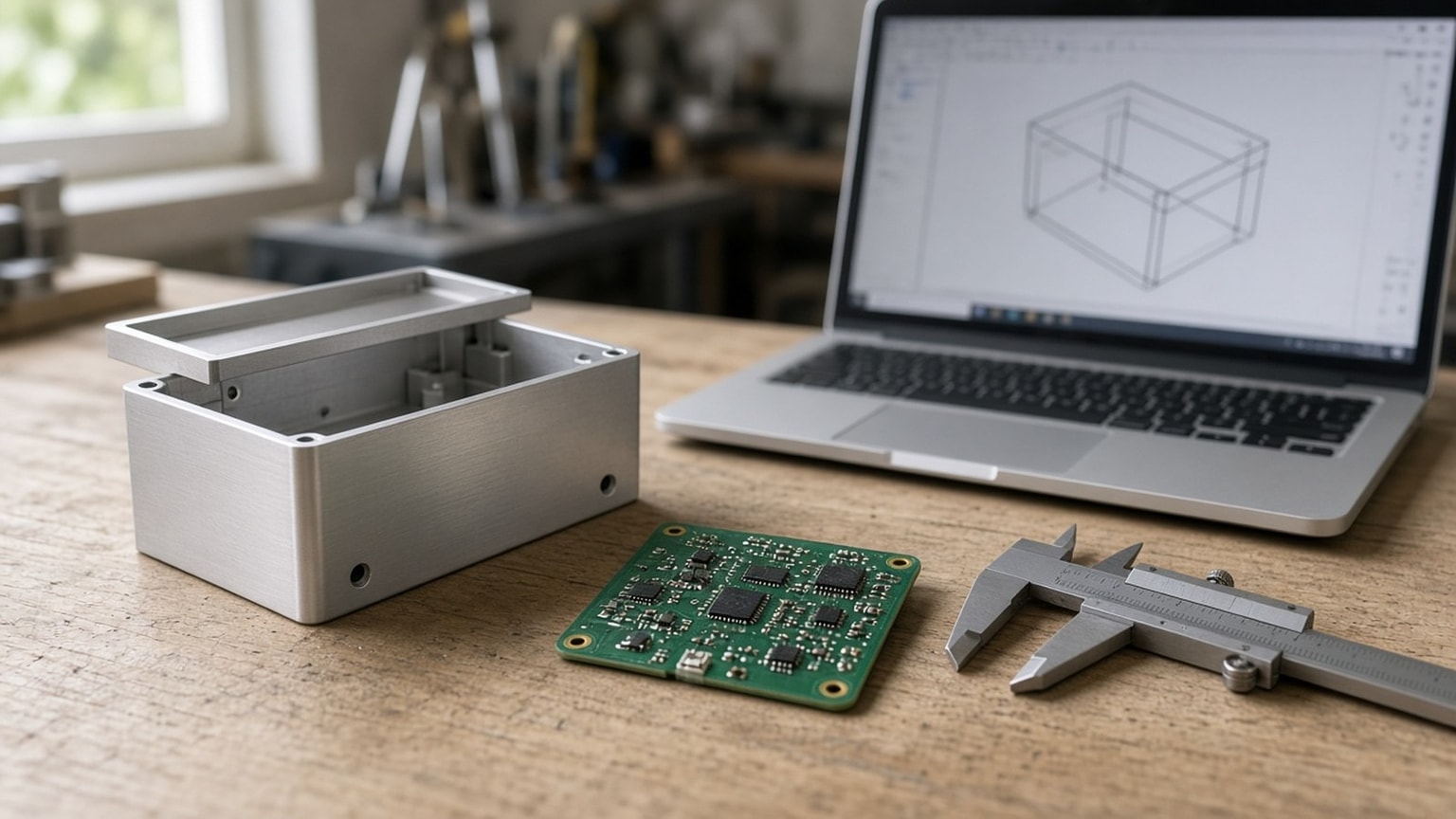
On 3 November 2026 OpenAI published Accelerating engineering for the physical world. The post says models are helping internal teams design, simulate, and build physical products, across mechanical and electrical engineering and end-to-end system design. It asks engineers, firms, and software vendors who design, simulate, or manufacture complex products to work with them.
A device, drawn by the model
OpenAI says it tested whether Astra could create a device with no direct human edits. GPT-6 set the functional requirements. Astra designed the look, the enclosure and the internal structures, selected the electrical parts, laid out the printed circuit board, and generated the firmware and the interface that connects the device to Codex. The look drew on a Work Louder collaboration and on games and toys.
Two team members did this as a side project in under a week. A contract manufacturer built a small batch of prototypes in under a month. The post is plain about the gaps. Getting the device ready for manufacturing still took several rounds of review. Astra did not consistently account for the manufacturer's production limits, tolerances, or the details required for assembly.
What the hardware teams measure
OpenAI's hardware and infrastructure teams use Codex and ChatGPT to create and revise CAD models, prepare manufacturing drawings, set up simulations, and review designs, across robotics and compute infrastructure. Since February, model usage on those teams, measured in tokens, has grown 23-fold.
Grace Lam, a forward deployed engineer, is quoted on moving from an idea to a part, converting 3D designs into production drawings, and setting up simulations and finite-element analysis with less manual work. Qiong Wang, a member of technical staff, describes Codex and ChatGPT as partners for constraints, architectures, ECAD, and design review. Jackie Lee, on the infrastructure staff, describes Codex taking repetitive modeling and cross-discipline checks in architecture, engineering, and BIM, with people still reviewing the result.
On BenchCAD 2.0, which tests whether a model can reconstruct 3D parts and assemblies and identify connections on circuit boards, a newer internal model scored 0.875 on average. GPT-6 Astra, at its highest reasoning setting, scored 0.594. The post calls that early evidence, and says the engineering lifecycle includes more than design.
Two outside shops
OpenAI is expanding work with Chip Ganassi Racing. With the R&D team, it is testing a path from 3D scans of existing parts to editable CAD and 2D manufacturing drawings, useful when the original files are gone. Matthew Ortman, an R&D engineer there, says the model has been useful going from raw scan data to a solid body, and that he works with Codex directly in CAD.
A new research collaboration with Mazda puts OpenAI's research and forward-deployed teams with Mazda's aerodynamics and crash-safety engineers. The work uses airflow and structural simulations, and has to account for styling and cost. The post says more results will come later. It also says agreement to use a Mazda visual was obtained from Mazda Motor Corporation, and that republication of that visual is prohibited. This article does not reproduce it.
Akihiro Nakata, a principal engineer at Mazda, is quoted on using Astra in Codex to simulate many nose shapes, see which features matter for drag, and leave room for the design team. The quote frames the point as design and aerodynamics together, not as a finished car.
The audience is wider than a code editor
Most public talk about these tools is still about software. This post is about boards, scans, and cars, and it says the outputs still need a human review before they can be built. Idlen's formats page lists placements in the editor and in browser chats. It does not claim a placement inside a CAD tool. The person waiting on the model is no longer only someone writing application code.