UK Sovereign AI Fund — £500M, Callosum First Equity Stake and 6 Startups Granted Supercompute to Keep British Champions Home
On April 16, 2026, Liz Kendall launches the UK Sovereign AI Unit: £500M to stop British AI startups from being pulled to the US. Callosum is the first equity recipient, six others get supercomputer access.
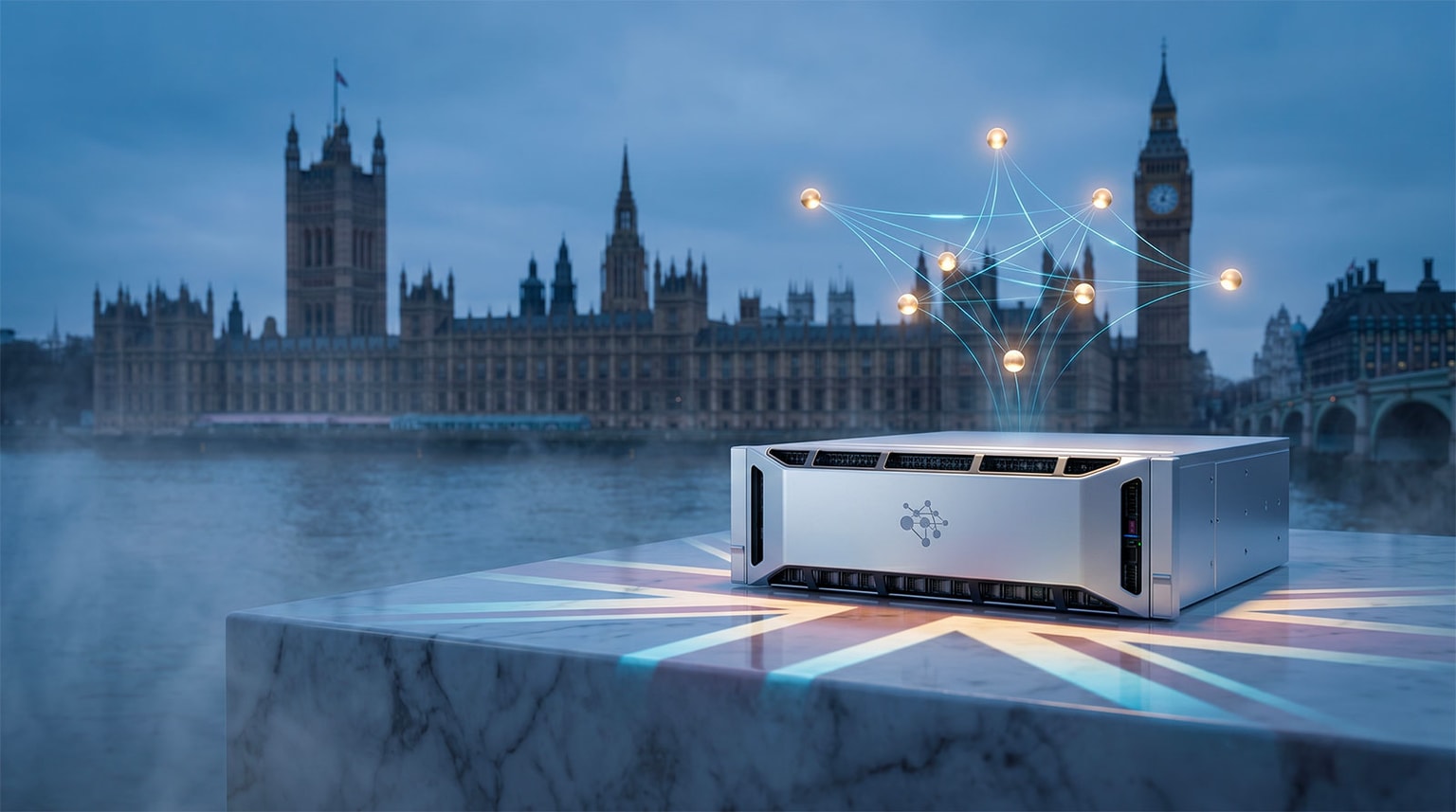
On April 16, 2026, Secretary of State for Technology Liz Kendall officially launched the UK Sovereign AI Unit, a state-backed fund endowed with £500 million designed to stop British AI startups from being sucked up by American capital. First move: an equity stake in Callosum, an AI infrastructure startup, and supercompute credits awarded to six others (Prima Mente, Cosine, Cursive, Doubleword, Twig Bio, Odyssey). The UK becomes the second country after France to structure a sovereign AI fund — Station F and FAI launched a similar scheme in January.
A State VC to Keep Champions at Home
Westminster's diagnosis is blunt: between 2023 and 2025, 74% of British AI startups that raised over $50M moved headquarters or R&D to the United States. DeepMind in 2014, Graphcore wobbling, Babylon Health gone to Austin. And most importantly, the ecosystem was losing talent precisely when value was crystallizing — frontier model training.
The UK Sovereign AI Unit operates like a VC embedded in government. Not as aid — as an investor. The unit takes stakes, with the same rights as a private VC, and can sit on the board. The difference is what it brings beyond capital:
| Lever | Offered by Sovereign AI Unit |
|---|---|
| Equity capital | Stake in funding round (amount undisclosed for Callosum) |
| Supercompute | Priority access to UK's fastest AI supercomputers |
| R&D support | Specialized grants + university partnerships |
| Procurement | Direct access to public purchasing for government contracts |
| Retention | Soft clauses encouraging HQ + IP to stay in the UK |
It's the package no American VC can offer: not just a check, but national infrastructure and a first sovereign customer. For a startup needing millions of GPU hours to train a model, that's more valuable than a $50M Series B from Sequoia.
Callosum: The Infrastructure Bet
The first equity recipient is Callosum, a London startup building a new class of AI infrastructure. The stake size stays confidential. Callosum is a telling pick for the UK doctrine: bet on infra rather than consumer applications.
The logic is coherent. On applications, US and Chinese competition is locked — OpenAI, Anthropic, DeepSeek. On infra — the layer that runs these models — open niches remain: inference compilers, memory management, multi-model routing. Callosum is positioned there. It's also the segment where efficiency gains make the biggest difference in compute cost — the main drag on European AI startups.
The Six Others: A Strategic Panel
The six startups getting supercompute access without equity are chosen to cover the UK Sovereign AI's priority verticals:
Prima Mente — AI drug discovery. Direct alignment with Downing Street's "Life Sciences Vision" strategy.
Cosine — autonomous coding agents. A direct competitor to Cursor and Emergent, but London-anchored.
Cursive — data annotation platform. Critical infra tool for dataset preparation.
Doubleword — model compression and edge deployment. Complementary to Callosum on compute efficiency.
Twig Bio — foundation models for synthetic biology.
Odyssey — AI video generation. The only consumer-market bet of the bunch.
The panel is balanced: 2 health, 2 infrastructure, 1 dev tools, 1 consumer. No concentrated bet. It's the portfolio of a sovereign that wants optionality across verticals rather than betting everything on one thesis.
Why Now: The Post-OpenAI-$122B Window
The timing isn't accidental. It comes three months after OpenAI's $122 billion round and while Anthropic is turning down $800 billion preemptive offers. The funding gap between the US and UK is becoming a civilizational gap. Westminster got it.
The £500M in the UK Sovereign AI Fund looks laughable against the $300 billion raised globally in AI during Q1 2026. But the fund isn't built to match the US. It's built to block departures — keep 20 British startups on UK soil where 50 would have left without it. It's a retention strategy, not a dominance play.
| Initiative | Country | Budget | Target |
|---|---|---|---|
| UK Sovereign AI Unit | UK | £500M | Equity + supercompute, multi-vertical |
| FAI Station F | France | €600M | Acceleration + compute |
| EU AI Innovation Package | Europe | €4B | Broad grants |
| CHIPS Act + AI riders | US | $52B+ | Fabrication + infrastructure |
| Made in China 2035 (AI) | China | ~$150B | Military + civilian R&D |
The UK is playing at the level appropriate for a mid-sized power: target 20-30 champions to retain, rather than pretend to create 200 unicorns that will leave anyway.
The Sovereign vs. Open Question
A debate runs through the British ecosystem. Does the Sovereign AI Unit, by taking stakes, risk bureaucratizing startups that need agility? Odyssey's founders privately indicated only the compute access interested them, not government equity. Others, notably Callosum, see the equity stake as a seal of trust that smooths future private rounds.
The answer will turn on two indicators.
Decision speed. If UK Sovereign takes 9 months to sign a check, startups will prefer Sequoia or A16z signing in 6 weeks. Operational teams need to be staffed by former private VCs, not civil servants.
Board non-intervention. If the government starts pushing political agendas — forced employee localization, contractual ministerial priority, export censorship — the best founders will refuse the money. The balance is narrow.
What It Signals for European AI
For startups. A new funding circuit opens. Two European countries (France, UK) now offer a competitive government package with non-standard terms: compute, procurement, IP protection. Founders can stack private + sovereign.
For VCs. Competition changes. "European Series A/B" rounds will increasingly see state co-investors. Term sheets will need specific governance clauses.
For Brussels. The Commission's AI Innovation Package (€4 billion) is broader but less directive. The UK demonstrates that a more targeted mechanism with equity stakes can have more impact than scattered subsidies.
In summary:
- Liz Kendall launches the UK Sovereign AI Unit April 16, 2026 with £500M — goal: keep AI startups in the UK
- The fund operates as a government VC: equity + supercompute + procurement + R&D support
- Callosum (AI infra, London) is the first equity recipient, amount undisclosed
- 6 other startups get priority UK supercompute access: Prima Mente (drug discovery), Cosine (coding agents), Cursive (data annotation), Doubleword (model compression), Twig Bio (synthetic biology), Odyssey (video generation)
- Retention strategy, not dominance: block departures to the US rather than match $300B American funding
- The UK becomes the second European country after France to structure a dedicated sovereign AI fund
The UK Sovereign AI Unit is not a Marshall Plan for European AI. It's selective surgery: identify the 20-30 startups worth keeping, offer them a package the private sector can't match, and hope that in five years three of them are worth more than the initial contribution. The logic is sound. Whether the Sovereign AI Unit staff can sign checks as fast as a Sand Hill Road VC remains to be seen. Because in 2026 AI, what kills a startup isn't the lack of money — it's the delay.
Sources: GOV.UK — AI firms get first backing through UK's Sovereign AI, City AM — UK launches £500m Sovereign AI fund, UKTN — £500m sovereign AI unit, Tech Funding News — 7 startups in first batch.