
OpenAI Launches Workspace Agents: The Death of Custom GPTs and a Frontal Attack on Claude Cowork and Microsoft Copilot
On April 23, 2026, OpenAI unveils Workspace Agents, the successor to Custom GPTs for the enterprise. Powered by Codex, they integrate natively with Slack, Google Workspace, Salesforce, Notion, Atlassian Rovo and Microsoft 365. Available in research preview for ChatGPT Business at $20/user, free until May 6, 2026, they push Custom GPTs into deprecation.
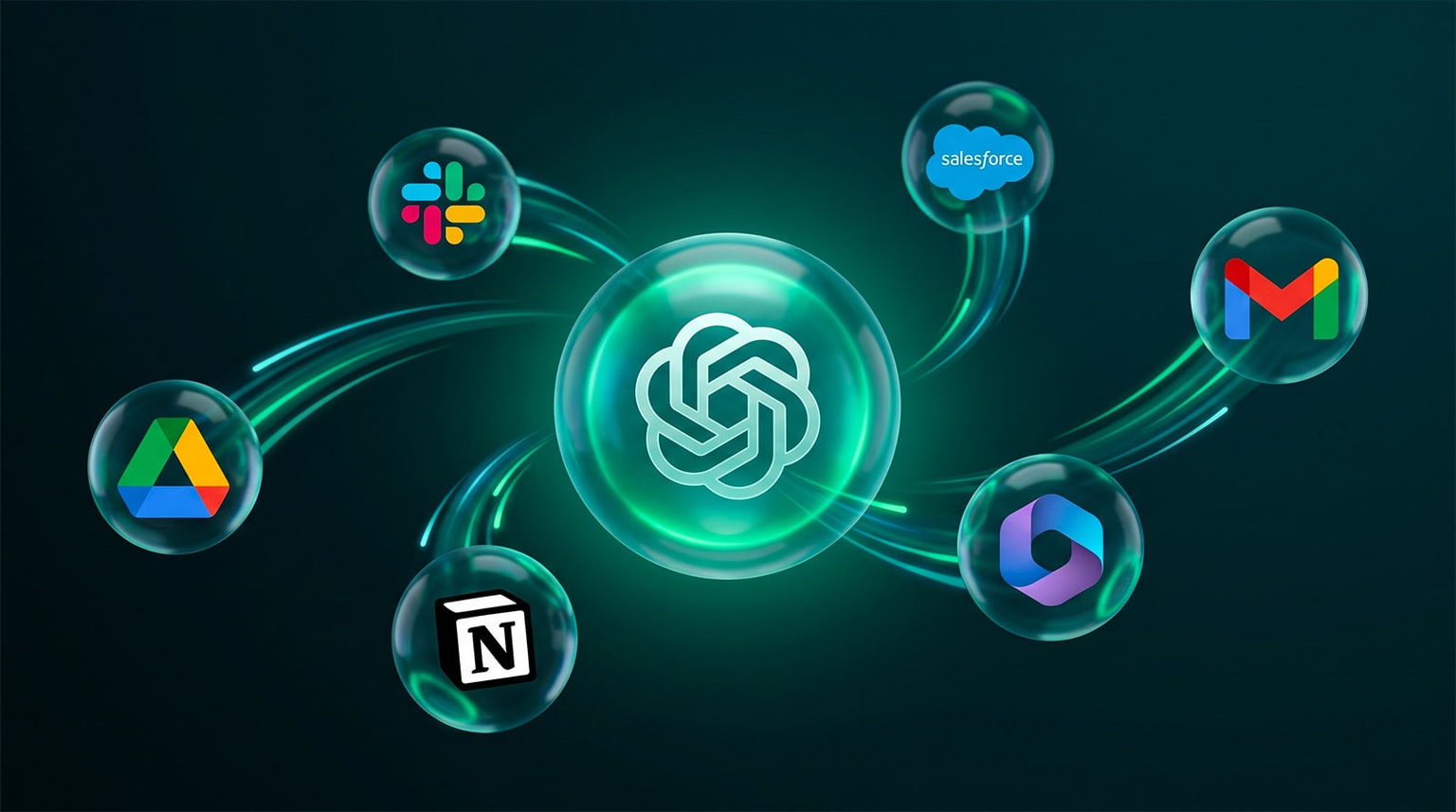
On April 23, 2026, OpenAI launched Workspace Agents, officially presented as the successor to Custom GPTs for organizations. Powered by Codex, these agents integrate natively with Slack, Google Workspace (Gmail, Drive, Calendar, Docs, Sheets), Salesforce, Notion, Atlassian Rovo and Microsoft 365. Available in research preview on ChatGPT Business ($20/user), Enterprise, Edu and Teachers, they are free until May 6, 2026, after which they switch to credit-based pricing. OpenAI also announced the progressive deprecation of Custom GPTs for organization accounts. It is a frontal repositioning of ChatGPT against Claude Cowork and Microsoft Copilot Agents.
What Workspace Agents Are (and Aren't)
| Feature | Custom GPTs (2023) | Workspace Agents (2026) |
|---|---|---|
| Engine | GPT-4 (static chat) | Codex + GPT-5.5 |
| Persistence | No memory across runs | Persistent memory per agent |
| Triggers | User-only | Slack, email, webhooks, scheduled |
| Native tools | Web search, code interpreter | Slack, Salesforce, Gmail, Drive, Notion, Atlassian Rovo, Microsoft 365 |
| Execution | Synchronous, 1 message | Asynchronous, multi-step in background |
| Sharing | Public link or intra-org | Dedicated workspace, build once, share team-wide |
| Pricing | Included in ChatGPT Plus | Credit-based (free until May 6, 2026) |
| Roadmap | Being deprecated | Official enterprise standard |
Workspace Agents retain memory across runs, can be corrected in conversation like a coachable employee, and improve with usage because they pick up team preferences (terminology, processes, deliverable formats). They run in OpenAI's cloud, so they keep working when the user isn't logged in, which Custom GPTs could not do.
OpenAI's Hand-Picked Examples
OpenAI showcased three patterns at launch — chosen because they reflect the most-resold B2B use cases:
- Sales prep agent. OpenAI's own sales team uses an agent that aggregates call notes, researches the target account, qualifies the lead, and drafts the follow-up email in the rep's inbox. Triggered by Slack or Salesforce events.
- Product feedback routing agent. Captures feedback from Slack, support and public channels, prioritizes it, and turns it into a weekly product action plan. Direct competition with Linear and Pylon.
- Weekly metrics reporting agent. Every Friday the agent pulls the data, generates charts, drafts the narrative, and ships a business report. Direct competition with Hex, Mode and Notebook AI products.
The pattern is unmistakable: OpenAI targets the orchestration layer between SaaS tools, not the model layer. That market is the same one Microsoft Copilot Studio, Notion AI and Linear Agent have hunted for 18 months.
Why Kill Custom GPTs Now
The Custom GPT standard launched in late 2023 was a marketing success (3M+ GPTs created) but an enterprise failure: too limited for real workflows, not enough native integrations, pricing unsuited to organizational accounts. OpenAI officially announces the deprecation of Custom GPTs on Business, Enterprise, Edu and Teachers accounts, with a forced migration to Workspace Agents on a date not yet set.
It is also a strategic signal. Custom GPTs were a 2023-era product when ChatGPT was mostly a personal assistant. Workspace Agents are a 2026-era product, where the fight is inter-application ambient computing. The transition continues OpenAI's recent trajectory: GPT-5.5 super-app + Codex Atlas (April 24), Codex desktop control on Mac (April 21), Agents SDK + sandbox harness (April 20).
The Attack on Anthropic and Microsoft
The launch timing is not neutral. On the same day, Anthropic and NEC announced the rollout of Claude Code to 30,000 employees in Japan, and on April 24, Microsoft published its Claude Mythos integration into the Security Development Lifecycle. All frontier players are simultaneously fighting for the agent layer.
The table below sums up the enterprise agent market state:
| Player | Product | Position |
|---|---|---|
| OpenAI | Workspace Agents | Custom GPTs successor, SaaS-native enterprise |
| Anthropic | Claude Code + Claude Cowork | Coding-first + Mac/desktop |
| Microsoft | Copilot Studio + Agent Governance Toolkit | Microsoft 365 enterprise, EU AI Act governance |
| Gemini Enterprise + A2A | Cross-app, native TPU8 | |
| Meta | (pending, Muse Spark) | Closed frontier, Superintelligence Labs focus |
OpenAI has a rare advantage: ChatGPT already reaches 800M+ weekly users, a meaningful share in business settings. Converting a quarter of that base into Workspace Agents users mechanically yields 200M potential paid accounts. No competitor has that funnel.
Pricing and Calendar
- Today (April 23 to May 6, 2026): free, unlimited research preview on every ChatGPT Business / Enterprise / Edu / Teachers account
- May 6, 2026: switch to credit-based pricing. OpenAI hasn't published detailed rates, but suggests an API-like model (input + output + tools usage)
- ChatGPT Business: $20/user/month (includes agent access, but not execution credits)
- Custom GPTs migration: planned for 2026-2027, exact calendar not yet communicated
The 14-day free usage launch is an aggressive adoption mechanism, designed to generate templates and community integrations before the pricing lock-in. It is a tactic OpenAI already used for GPT-5 Builder and the Codex SDK.
What This Changes for Publishers and Developers
1. B2B Custom GPTs need to migrate. If you operate Custom GPTs internally in a company, plan the migration. Priority capabilities to rebuild are custom actions (tools), conversational memory, and webhook triggers.
2. The middleware agents market shrinks. Workspace Agents natively integrates Slack, Salesforce, Gmail, Notion, Atlassian Rovo. Startups that sold these integrations as standalone products (Glean, Pylon, Trellix, etc.) will need to differentiate on vertical depth or disappear. The window is 12-18 months.
3. The Codex SDK becomes strategic for developers. Like Anthropic Claude Code on its partners, OpenAI pushes Codex as the universal agent layer. Dev tool publishers (CI/CD, testing, observability) have an interest in publishing Workspace Agents templates before the research preview ends.
4. AI app monetization gets harder but richer. If users navigate between ChatGPT (Workspace Agents), Slack and their browser to trigger tasks, the in-chat ad inventory layer becomes more valuable. Native monetization solutions (see Idlen for AI app publishers) gain relevance because they let third-party AI apps capture value without depending on the OpenAI ecosystem.
Risks and Uncertainty Zones
ISV partner conflicts. OpenAI integrates natively with Slack, Salesforce, Notion. Salesforce is also an OpenAI partner on Einstein. Pricing alignment may produce friction: if Workspace Agents ends up cheaper than Einstein Copilot, Salesforce will push its own alternatives.
Enterprise security. An agent that can write into Salesforce, send Gmail and trigger Slack messages without human validation is a massive attack vector. OpenAI emphasizes admin controls, but no agent-specific SCIM/SOC2 integration was announced. Fortune 500 CISOs will demand more guarantees before adoption.
Codex saturation risk. Codex underpins Workspace Agents. If there's a capacity limit or stability incident (already encountered on GPT-5.4 in March), the entire OpenAI agent ecosystem stalls simultaneously. Single-model dependence is more fragile than the multi-model architecture used by Cursor or Cognition Devin.
Bottom line:
- Workspace Agents: official Custom GPTs successor for ChatGPT Business / Enterprise / Edu / Teachers
- Announcement April 23, 2026, powered by Codex
- Native integrations: Slack, Google Workspace, Salesforce, Notion, Atlassian Rovo, Microsoft 365
- Persistent memory, asynchronous execution, workspace-shared
- Free until May 6, 2026, then credit-based pricing
- Custom GPTs progressively deprecated for organization accounts
- Frontal battle with Claude Cowork, Microsoft Copilot Studio, Gemini Enterprise
Workspace Agents is the product that closes the OpenAI 2026 strategy loop: a single engine (GPT-5.5 + Codex), a persistent agent layer, a 800M weekly users ChatGPT funnel, and rapid deprecation of transitional products like Custom GPTs. It is also a real-world test of the "agent before model" thesis: what creates value isn't only raw LLM performance, but the quality of multi-tool orchestration. If Workspace Agents converts even 5% of existing ChatGPT Business accounts into active users before summer, OpenAI will have reclaimed the initiative Anthropic gained with Claude Cowork in Q1. The window is now counted in weeks, not months.
Sources: OpenAI — Introducing workspace agents in ChatGPT, VentureBeat — OpenAI unveils Workspace Agents, a successor to custom GPTs, Reworked — OpenAI Replaces Custom GPTs With Workspace Agents, The New Stack — The real story from OpenAI's big week is Workspace Agents, 9to5Mac — OpenAI updates ChatGPT with Codex-powered workspace agents.


